
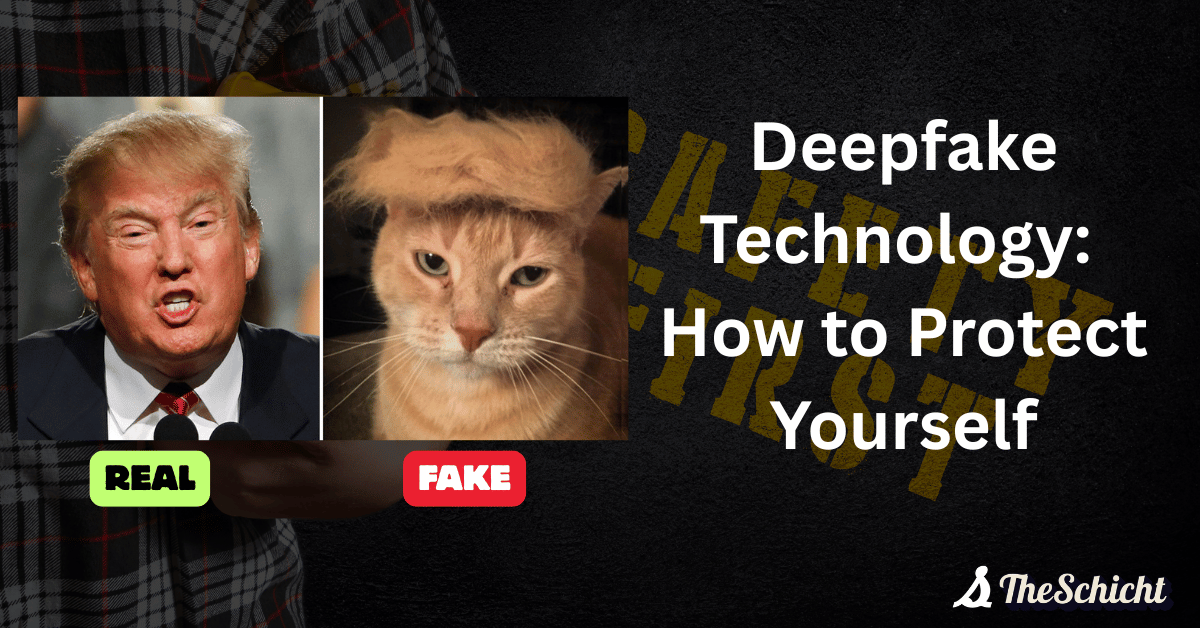

Deepfake Technology: Risks, Real-World Threats & How to Protect Yourself in 2026
Your boss calls you on a video chat. Same face. Same voice. Same office background. They tell you to wire $25 million to a new account immediately.
You do it. Because why wouldn’t you?
That’s exactly what happened to a finance worker at engineering firm Arup in early 2024. Except the “boss” was a deepfake — an AI-generated clone so convincing that the employee didn’t question it for a second.
Welcome to 2026, where deepfake technology has graduated from “funny face-swap app” to a multi-billion dollar fraud engine that’s virtually impossible to detect with the naked eye. Voice cloning now needs just three to five seconds of audio. Realistic video deepfakes cost as little as $5 and take under 10 minutes to generate. And the average American encounters 2.6 deepfake videos every single day.
If you’re not scared yet, you’re not paying attention. Let’s fix that.
<!– [INSERT IMAGE 1: Deepfake technology face swap demonstration showing AI-generated synthetic media] –>
What is Deepfake Technology and How Does it Work?
Deepfake technology uses artificial intelligence — specifically deep learning neural networks called Generative Adversarial Networks (GANs) — to create synthetic media that looks, sounds, and feels real. Two AI models essentially play a game of cat and mouse: one generates fake content, the other tries to detect it. They train each other until the fakes become indistinguishable from reality.
Here’s what makes 2026 different from even two years ago.
The tools are now open source and consumer-grade. Models like LTX-2 can be downloaded and run on consumer hardware. DeepFaceLab, which powers over 95% of deepfake videos, is freely available on GitHub. Services like HeyGen and ElevenLabs have turned voice and video cloning into point-and-click operations.
The old tells — weird teeth, bad lighting, uncanny valley vibes — are mostly solved. Modern deepfakes replicate facial features, voice tone, gestures, and even subtle mannerisms. According to security researchers, roughly 68% of facial manipulation deepfakes are now virtually indistinguishable from genuine media.
This isn’t hypothetical future-tech. This is right now, running on a laptop near you.
Deepfake Technology by the Numbers: 2026 Statistics
The numbers tell a story that should keep every CISO, CFO, and regular human awake at night.
Financial devastation is accelerating. Deepfake-enabled fraud caused over $200 million in losses during Q1 2025 alone. By Q2, that figure jumped to $347 million. Full-year US losses from deepfake-related fraud hit $1.1 billion in 2025 — triple the $360 million from 2024. Deloitte projects AI-facilitated fraud losses will reach $40 billion by 2027 at a 32% compound annual growth rate.
The scale is staggering. Deepfake files are projected to reach 8 million in 2025, up from 500,000 in 2023. Fraud attempts involving deepfakes have increased by 2,137% over three years. Deepfake-as-a-Service (DaaS) platforms became widely accessible in 2025, putting sophisticated attacks within reach of criminals at every skill level.
Humans can’t keep up. Only 24.5% of people can accurately detect high-quality video deepfakes. Voice cloning now requires just three to five seconds of sample audio. Meanwhile, 80% of companies have zero established protocols for handling deepfake attacks.
Enterprises are bleeding. Businesses faced an average loss of nearly $500,000 per deepfake incident in 2024, with large enterprises losing up to $680,000. CEO fraud using deepfakes now targets at least 400 companies daily. <!– [INSERT IMAGE 4: Deepfake technology statistics and financial losses infographic 2026] –>
The 6 Most Dangerous Deepfake Risks in 2026
1. Executive Impersonation and Corporate Fraud
This is the deepfake risk that writes the biggest checks — literally. Attackers mimic CEOs, CFOs, and senior leaders on video calls to authorize wire transfers, approve contracts, or push through sensitive decisions. The Arup $25 million heist used a real-time deepfake video conference where multiple “colleagues” were all AI-generated clones. These attacks exploit hierarchical trust in corporate environments where employees are conditioned to follow executive instructions without questioning.
2. Voice Cloning Scams
Your mom calls. She’s panicked. She needs money immediately for an emergency. Her voice is perfect — the cadence, the emotion, the little verbal tics only she has. Except it’s not her. Scammers are using AI voice cloning tools that only need a few seconds of source audio, often scraped from social media videos, webinars, or even voicemail greetings. According to McAfee research, 40% of people said they would send money if they received a voicemail from their spouse requesting help. Among those who fell for voice clone scams, 77% lost money.
3. Political Manipulation and Election Interference
Fabricated videos of political leaders saying things they never said are becoming a go-to weapon during election cycles. Cases of political deepfakes reached 82 across 38 countries between mid-2023 and mid-2024, and the number surged further in 2025 with politicians being the most impersonated targets at 33% of all deepfake incidents. The damage is done before any debunking can happen — disinformation spreads the moment a deepfake is viewed.
4. Deepfake-as-a-Service (DaaS) Platforms
The barrier to entry has collapsed. In 2025, DaaS platforms became mainstream on underground markets, offering ready-to-use AI tools for voice cloning, video manipulation, and persona simulation. No technical expertise required. Some researchers have described an emerging underground economy of AI-powered social-engineering-as-a-service, including automated platforms that spoof caller IDs and play fraudulent voice recordings to steal two-factor authentication codes.
5. Identity Verification Bypass
Deepfakes now account for approximately 40% of all biometric fraud attempts. Criminals generate synthetic identities with convincing video footage to bypass remote verification systems used by banks, government agencies, and hiring platforms. The cryptocurrency sector was hit hardest, accounting for 88% of all detected deepfake fraud cases in 2023 and seeing a 50% year-over-year increase in attacks. Gartner predicts that by 2026, 30% of enterprises will no longer trust standalone identity verification solutions.
6. Non-Consensual Intimate Imagery (NCII)
By sheer volume, this is the most common deepfake use case — and the most devastating for victims. Roughly 96% of all deepfakes online are non-consensual sexual content, with 99% of those targeting women. The UK’s Internet Watch Foundation found 1,286 illegal AI-generated child abuse videos in early 2025 alone. Telegram “nudify” bots in South Korea reached approximately 4 million monthly users by late 2024. <!– [INSERT IMAGE 2: Deepfake detection tools analyzing facial inconsistencies in video] –>
How to Spot Deepfakes: Detection Methods That Actually Work
The advice from 2023 — “look for weird teeth” — is effectively obsolete. Modern deepfake detection requires sharper eyes and smarter strategies. Here’s what security researchers recommend looking for in 2026.
Visual Detection Cues
Watch the eyes. Real humans blink every 2-10 seconds in irregular patterns. Deepfakes often produce uniform blinking or skip it entirely. Also check whether pupils dilate naturally in response to light changes — AI frequently gets this wrong.
Inspect the hairline. Deepfakes commonly show blurring, flickering, or unnatural color transitions where hair meets skin. This boundary is computationally expensive to render correctly.
Check lighting and shadows. AI often ignores the physics of light. If shadows on a face don’t match the direction of background lighting, or if skin glare looks unnatural, you may be looking at a fake.
Look for skin texture uniformity. Real faces have wrinkles, freckles, pores, and moles with natural variation. Deepfakes tend to produce strangely smooth or uniform skin that lacks these micro-details.
Study the edges of accessories. Glasses, earrings, and collars often show warping, clipping, or inconsistent rendering. These peripheral elements are frequently deprioritized by deepfake models.
Audio Detection Cues
Listen for flatness. AI-generated voices often sound slightly monotone or fail to respond naturally to emotional shifts in conversation. Subtle tonal changes that real voices make unconsciously are difficult for models to replicate.
Notice unnatural pauses. Real-time deepfake voice systems sometimes introduce micro-delays or odd rhythm breaks that don’t match natural speech patterns.
Background noise inconsistency. Deepfake audio may have artificially clean backgrounds or introduce noise artifacts that don’t match the supposed environment.
Behavioral Red Flags
Urgency and emotional pressure. Deepfake scams almost always involve an urgent request designed to bypass your rational thinking. The fake “boss” needs you to wire money now. The fake “family member” is in danger right now.
Reluctance to verify. If the person on the other end resists or deflects when you suggest hanging up and calling back on a known number, that’s a massive red flag.
Best Deepfake Detection Tools in 2026
Manual detection isn’t enough anymore. Here are the leading deepfake detection platforms that organizations and individuals can leverage.
Sensity AI — A forensic-grade platform offering multilayer analysis across video, audio, images, and metadata. Used by law enforcement, intelligence agencies, and enterprises. Provides confidence scores, visual indicators, and audit-ready forensic reports.
Reality Defender — Deploys real-time deepfake detection across communication channels and applications. Models are continuously updated to anticipate new deepfake techniques. Serves financial institutions and government agencies.
Pindrop — Specializes in voice authentication and audio deepfake detection for contact centers. Analyzes call audio characteristics to identify synthetic voices and flag fraudulent calls.
Microsoft Video Authenticator — Analyzes photos and videos to provide a confidence score indicating whether media has been artificially manipulated. Examines subtle fading and grayscale elements invisible to the human eye.
Truepic — Focuses on content provenance and authentication. Embeds cryptographic verification at the point of capture, proving content hasn’t been altered since creation. Used in journalism, insurance, and legal contexts.
For personal use: Google Reverse Image Search and TinEye can help track down the original source of suspicious images and spot recycled or manipulated content.
How to Protect Yourself From Deepfake Scams
Here’s your practical deepfake protection playbook — strategies that actually work whether you’re protecting yourself, your family, or your organization. <!– [INSERT IMAGE 3: How to protect yourself from deepfake scams and AI fraud in 2026] –>
For Individuals
Set up a family safe word. Pick something random and never shared online — “Purple Octopus” or “Lego Teapot.” If someone calls claiming to be a family member in an emergency, ask for the safe word immediately. No exceptions. If they can’t provide it, hang up and call back on their known number.
Break the connection. Voice spoofing depends on you staying on the line. Hanging up and calling the person back on their saved number is the single most effective countermeasure against voice cloning attacks.
Lock down your biometrics. Enable Identity Check on Android or Stolen Device Protection on iOS. Add extra authentication layers to sensitive accounts.
Limit your voice footprint online. Scammers scrape source material from public videos, webinars, and social media posts. Consider limiting publicly accessible audio and video content where your voice is clearly captured.
Verify before you trust. If any video call or message involves a financial request, a password change, or anything sensitive — verify through a completely separate channel. Always.
For Organizations
Implement multi-factor verification for sensitive actions. No wire transfer, contract approval, or credential reset should rely solely on a single video or voice confirmation. Require out-of-band verification through a separate, pre-established channel.
Deploy deepfake detection tools. Integrate solutions like Reality Defender or Sensity AI into your communication and verification workflows. Many support API-based integration for real-time screening.
Run deepfake awareness training. More than half of business leaders report their employees have received zero training on recognizing deepfakes. Regular scenario-based training that exposes employees to examples of convincing deepfakes dramatically improves detection rates.
Adopt media watermarking and content provenance. Technologies from providers like Truepic embed invisible authentication markers in legitimate communications, making it easier to distinguish genuine content from manipulated media.
Establish an incident response playbook. Have a clear, documented process for what happens when a suspected deepfake attack is detected. Include escalation procedures, forensic documentation steps, and communication protocols.
Deepfake Laws and Regulations: Where We Stand
The legal landscape is finally catching up to the technology — though it’s still playing from behind.
United States: The TAKE IT DOWN Act. Signed into law on May 19, 2025, this landmark federal legislation criminalizes the knowing publication of non-consensual intimate imagery, including AI-generated deepfakes. Violators face up to two years in prison for content depicting adults and three years for minors. Covered platforms must establish notice-and-takedown processes by May 19, 2026, removing flagged content within 48 hours of a valid request. The FTC handles enforcement.
Beyond the TAKE IT DOWN Act, the DEFIANCE Act (reintroduced by Rep. Ocasio-Cortez) would give victims the ability to seek civil damages from deepfake creators. The U.S. Sentencing Commission is actively developing guidelines for criminal penalties under the new law.
State-level action. Over 30 states have passed laws addressing deepfakes, with California, Texas, Virginia, and New York leading on election manipulation and non-consensual pornography restrictions. However, enforcement varies wildly by jurisdiction.
European Union: AI Act. The EU’s AI Act classifies deepfake systems under transparency requirements, mandating that AI-generated content be clearly labeled. Non-compliance triggers multi-million-euro fines.
Global outlook. Countries including South Korea, China, and the UK have introduced or expanded deepfake-specific regulations. International coordination is increasing, but experts warn that the lack of harmonized global standards remains a critical gap.
The Bottom Line: Your Deepfake Survival Playbook
Deepfake technology in 2026 isn’t a curiosity or a novelty — it’s a fully weaponized attack surface that cost Americans over a billion dollars last year and is accelerating. The tools are free. The fakes are nearly perfect. And 80% of organizations have no plan.
Here’s your cheat sheet:
If you remember nothing else, remember these three rules:
Rule 1: Never trust, always verify. Any unexpected request involving money, credentials, or sensitive data — verify through a separate, pre-established channel. Every time. No matter who appears to be asking.
Rule 2: Set up a family code word today. It takes 30 seconds and could save you from a six-figure scam. Random. Offline. Non-negotiable.
Rule 3: Assume it can be faked. Video calls, voice messages, images — all of it. The technology has crossed the line where your eyes and ears alone are no longer reliable verification tools.
The arms race between deepfake creators and defenders will define cybersecurity for the next decade. The creators have a head start. But now you know how the game works — and that puts you ahead of 80% of organizations and 75% of people who can’t reliably spot a fake.
Stay paranoid. Stay safe. And for the love of everything, go set up that safe word.
Sources & Further Reading:
- Resemble AI — Q1 2025 Deepfake Incident Report — Security Magazine
- McAfee — State of the Scamiverse Report 2025
- Keepnet Labs — Deepfake Statistics & Trends 2026
- Fortune — AI Fraud to Surge in 2026 After $12.5B in Losses
- U.S. GAO — Combating Deepfakes Report
- TAKE IT DOWN Act — Congress.gov
- Kaspersky — How to Protect Yourself From Deepfake Scammers
- Cyble — Deepfake-as-a-Service in 2025